1981
Video HD, original 16mm film
Sound, colour, 45 minutes 46 seconds
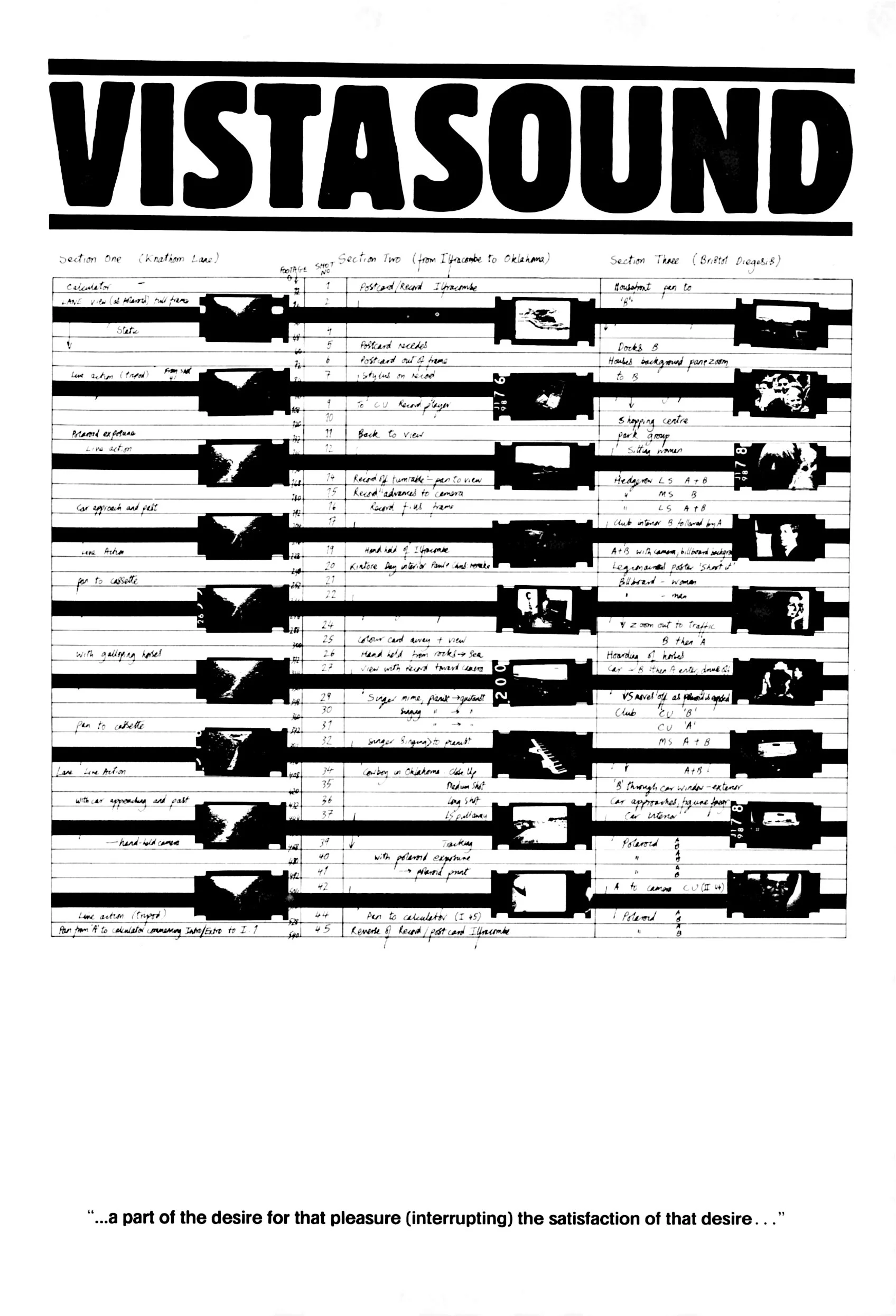
" ...a part of the desire for that pleasure (interrupting) the satisfaction of that desire..."
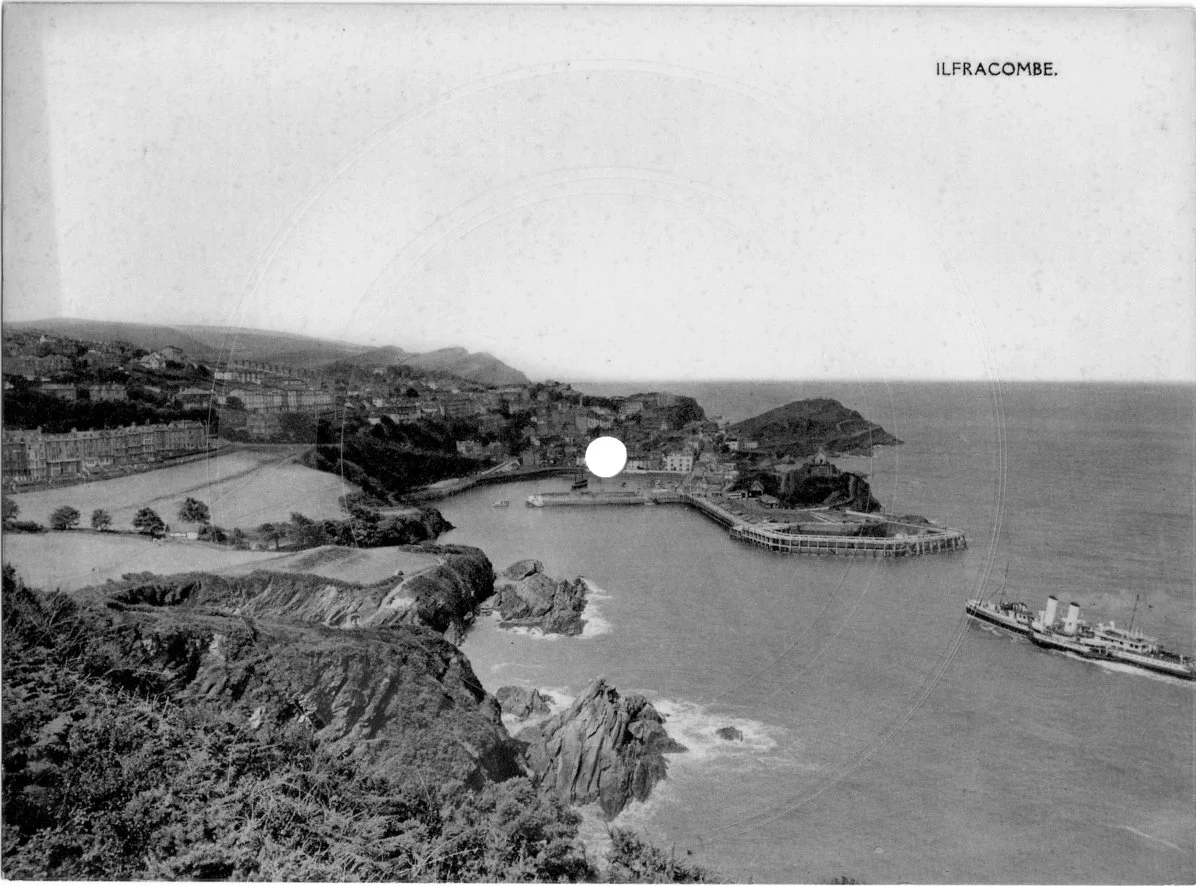
The shooting of VISTASOUND commenced in 1977 and centred on a holiday postcard (above) upon the surface of which was pressed a recording of a popular 50's song. This 'objet-trouve' was seen as analogous with film, combining a picture record and sound record physically onto a cellulose-acetate base. VISTASOUND then developed by raising questions around the associations that are made between the words in songs and particular places. Locations included, Bristol and Devon in the UK and Norman, Oklahoma in the USA.
Though music can function in a variety of ways in film, within dominant cinema it is generally used to manipulate the audience emotionally,
VISTASOUND attempts to oppose such manipulations by opening a critical space, such that the relation between the various sound images, (music, sound 'effects', spoken words, etc.), and the visual images, (that of the film-on-the-screen, the photographs, people and places seen), are consciously understood in relation to the film's overall construction: the picture material is in three parts, each printed with the same optical sound negative material; the three ‘married’ sound prints are cement joined to make the completed projection print.
The debate between the two protagonists (early roles for Alex Jennings and Tim Bendinct), occurs through three differing filmic spaces and employs at one point the word 'symbiotic'; the reference could be psychoanalytic implying voyeurism and fetishism; or it could be a reference to the observational and recording activities of the military and police; or it could merely be a reference to enthusiasm, to that of the ornithologist or the tourist taking holiday snaps.
"This object describes the space which is the location of that substitution". (1981)
Premiered during a screening tour of Australia in 1981.
A three-screen version was performed for a screening at the Australian Centre for Photography in 2009.
a Preservation print is held by the Australian National Film and Sound Archive, Canberra.
The b&w flyer,(see at right), is of a colour litho poster made for the screening at the Arnolfini Gallery, Bristol, (1981), the design was based on the working chart for the film of the different filmic time/spaces, it was featured in a Arts Council of GB touring exhibition, Charting Time, opening at the Serpentine Gallery, London.(1986)
A three-screen version was installed for a screening at the Australian Centre for Photography in 2009.
2020,Planning a multi-screen version for commissioning.
Included as downloads is a student paper written by Chris Toovey (UWA) in response to the film; and an email dialogue about the film. Later, I was reminded (by Valie Export), that Christian Metz, a foundational figure in film semiotics and apparatus theory, argued that cinema is a "technique of the imaginary" that is the product of two distinct technological inventions: photography and the phonograph (or sound recording).